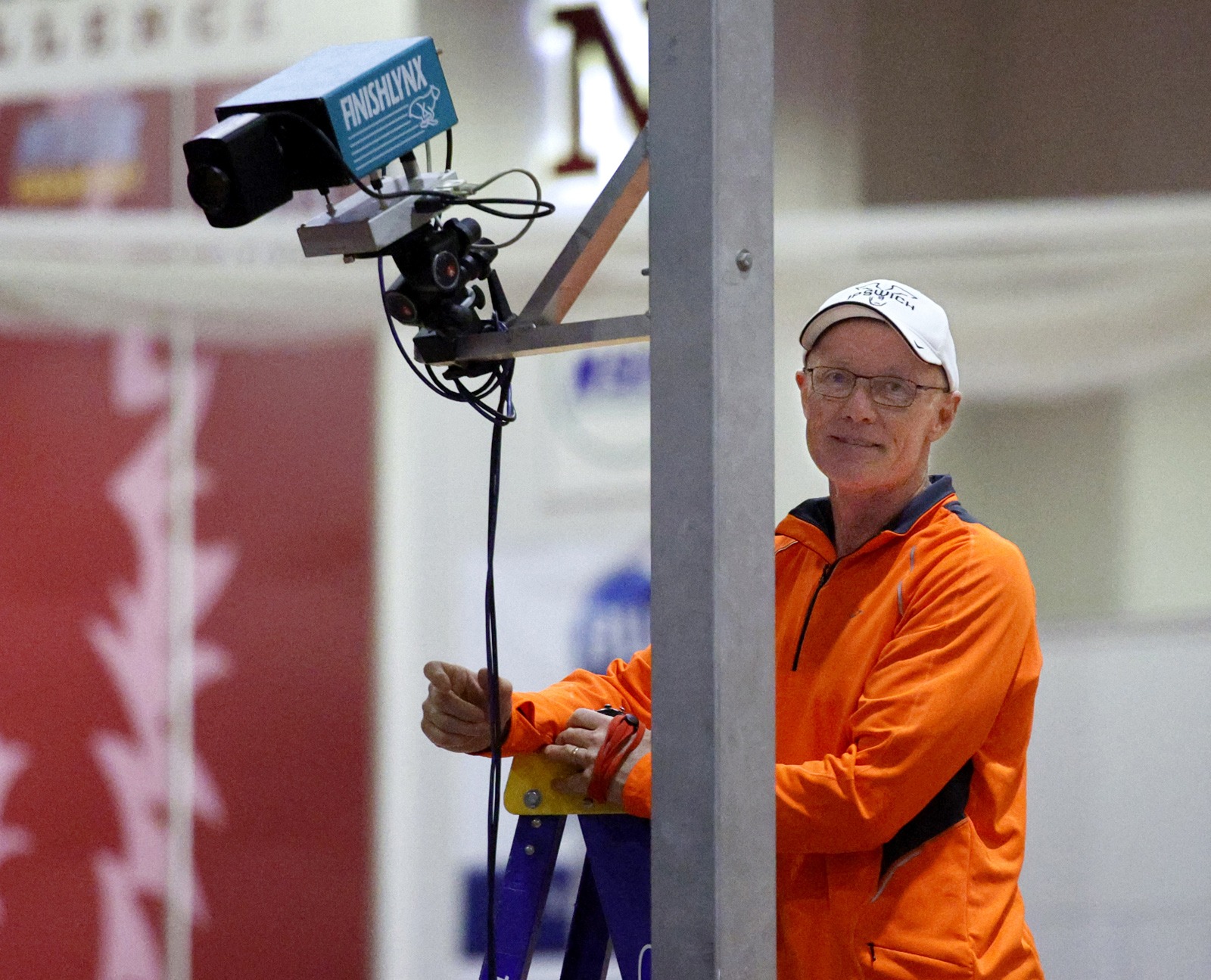
If instant replay ushered in a new era in sports like football, basketball and baseball, then fully automatic timing, or FAT systems, are doing the same in South Dakota high school track and field.
If the proposal passes and is adopted by the athletic directors, only FAT times will be accepted for state qualifying purposes beginning next season.
It’s all in the name of fairness, said Ipswich head coach Todd Thorson, who is also a member of the track and field advisory committee.
“Anyone who’s ever worked a meet, you know there’s human error,” he said.

Maybe someone missed the gun by half a second. Or their stopwatch malfunctioned.
Or maybe it didn’t, but the human eye seeing and the human finger pressing the stopwatch at the exact same time a different human body crosses an inch-wide stripe on the ground is pretty hard to do.
FAT systems eliminate all that, Thorson said.
The system works by taking the exact moment the starting gun went off and overlaying it on a still image of athletes crossing a finish line, providing detailed, exact times for every competitor in every race.
That’s important, Thorson said, because hundredths, even tenths of a second can make a big difference.
“Even in the 2-mile, there’s kids within two-tenths of qualifying,” he said.
And when Class A and B teams decided to go to a “true 24” system of qualifying for the state meet, it only made sense to level the playing field, Thorson said.
The natural progression has meant the purchase of new equipment by several area schools. Webster purchased its system a handful of years ago, while Ipswich and Warner are among teams that acquired their equipment just this year and are hoping to put it to use for home meets yet this season.
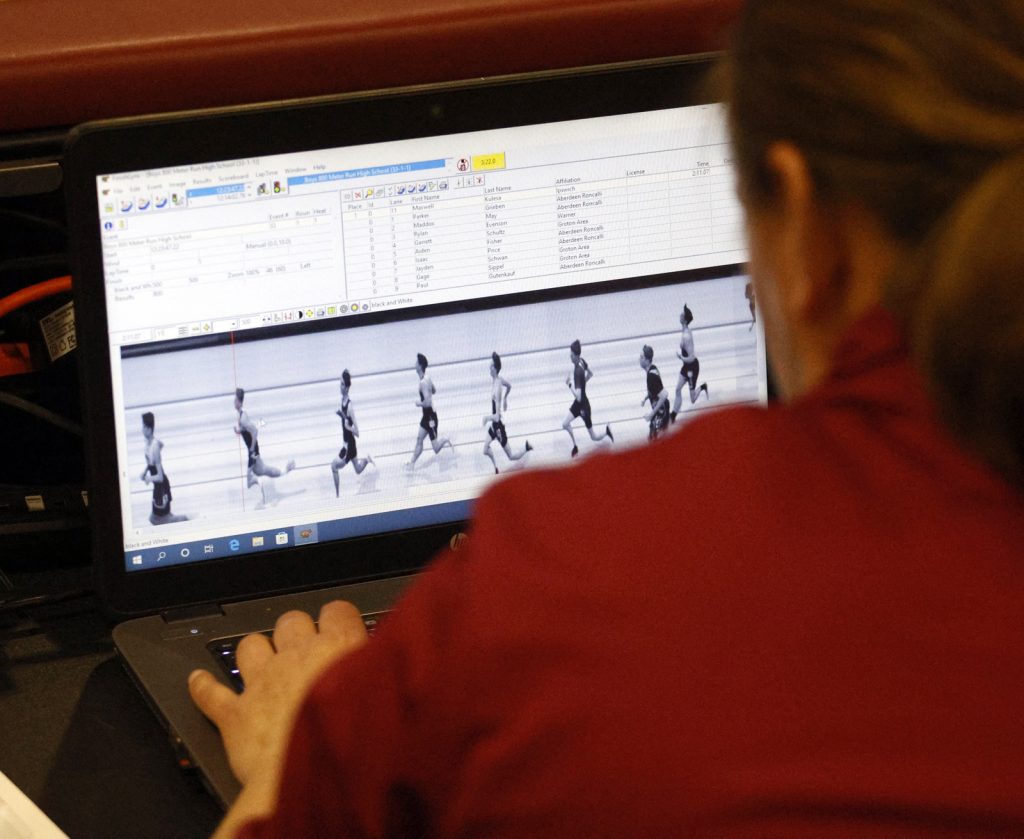
Sully Buttes, which purchased its system when the Chargers built a track about six years ago, has been instrumental in helping others get up and running, even hosting a clinic a couple weeks ago.
“Pierre was the only other school in the area with a FAT system,” said Chargers coach Jeremy Chicoine. “They did so much for helping us get up and running. Everything we’re putting out there is 100 percent paying it forward for what Pierre did for us.”
Chicoine said he’s glad other schools are jumping in with FAT systems.
“I think it’s a fair thing for the kids,” he said. “I’ve been coaching for almost 20 years. Most of my career has been handheld timing. … Over my career I’ve seen some pretty significant inconsistencies with that. The FAT is legitimate in that the kid gets the time and place he truly deserves.”
Thorson likened the change to the implementation of the shot clock in basketball, except instead of adding the number of people it takes to work a track meet, FAT systems eliminate them by not requiring pickers and timers at the finish line.
“You’re going to save yourself 18 workers a track meet,” Thorson said.
Chicoine concurred.
“I think it helps us run a more efficient meet,” he said.
And efficiency means earlier finish times and getting teams back home sooner.
“It’s good for the athlete, and it’s good for the meet managers,” Thorson said.