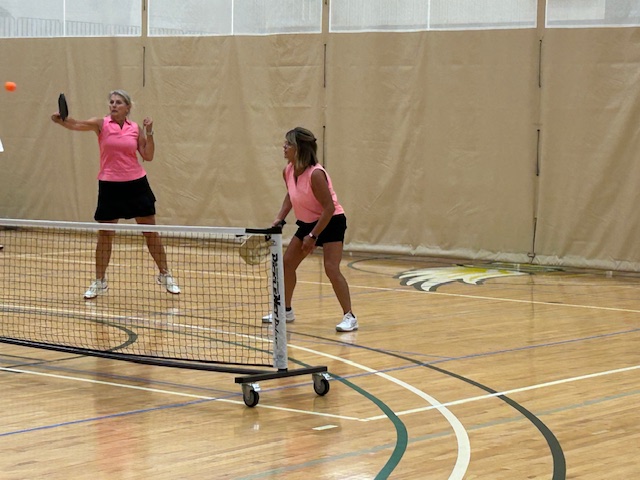
The inaugural Smash the Stigma Pickleball Classic drew 36 teams in two divisions Saturday morning at the Strode Center.
The tourney was designed to serve as a fundraiser to help draw awareness to suicide prevention.
“We had just wanted to do more for the AFSP (American Foundation for Suicide Prevention) cause,” said Madeline Dell, who co-organized the event along with Nicole Johnson. “She actually introduced me to pickleball. She said let’s have a tournament and see how it goes. So, she was really the genesis of it all and then we just kind of ran with it.”
Dell said she and Johnson share a common bond.

“We both have lost friends, family, for us,” Dell said. “It’s more about the mental health advocacy, and talking saves lives, and just letting people know that they’re not alone.”
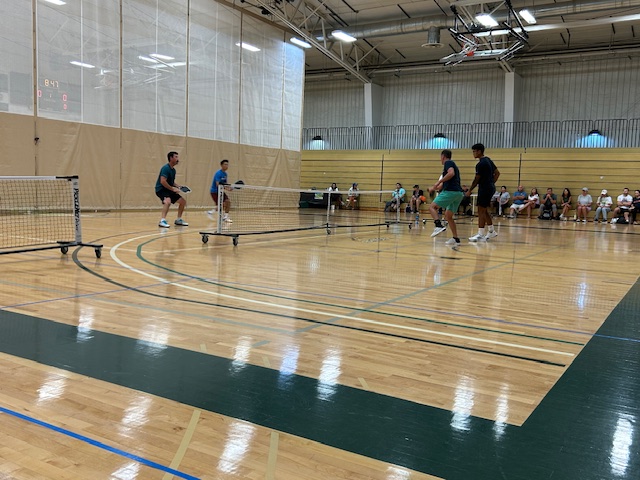
The event, while not officially a part of the local pickleball association, attracted 20 teams in the Competitive Division and 16 teams in the Chill Division, with players coming from as far away as Sioux Falls and Omaha, Neb. There was a $1,000 first-place prize for the winners of the Competitive bracket.
The event served a two-fold purpose.
“Part competitive, part social. I think the social side has been what surprised me today,” Dell said. “I love that people are staying to watch everyone play and support, and to me, that’s what it’s all about is the connection and building something bigger for people to feel like they’re a part of.”
Dell is hoping that the Smash the Stigma becomes an annual event.
“We’ve learned so much this year and we’ve gotten so much feed back,” she said. “Really this year has been huge because people have been so patient and gracious with us as we kind of figure it all out.”
Saturday’s event raised more than $5,000 in the battle against suicide.
“The reason we are here is that there is a Suicide Prevention Walk on Sept. 6 and that’s really what we’re raising more for,” Dell said. “What that does is that helps educate the community on warning signs, things to look for, high-risk situations and then connects people to the resources that they need so we can hopefully save some lives.”