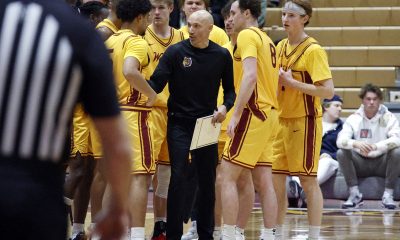
Two and a half weeks of weather-related postponements and cancellations in the first half of the boys and girls basketball seasons have posed scheduling conflicts and logjams for teams across the Northeast South Dakota region this winter, but it’s not just administrators and athletes that are affected by the unexpected.
The region has just enough basketball officials to cover a regular slate of games, but the crush of games in the latter half of the season has put a strain on an already taxed pool of officiating talent.
Some of those officials, like Scott Witlock of Aberdeen, are averaging four or five nights a week.
And that, he says, is taxing in more ways than one.

“Not just mentally, but physically, too,” Witlock said. “Especially around our area. Our officials aren’t getting any younger, and we’re struggling to get the next generation to start doing it. That’s what’s scary.”
With games coming fast and furious, teams playing upwards of five out of eight days like the Aberdeen Roncalli boys had a couple weeks back, emotions and bodies can both break down.
“Emotionally, you’re just fried by the end,” Witlock said.
Kim Zimmerman of Aberdeen echoed Witlock’s sentiment.
Zimmerman said he tries to keep his schedule to an every-other-night rhythm, but the mad rush to get games in before playoffs has made that difficult.
“The officiating crew is a close knit group of guys, and we try to help each other out as much as we can,” Zimmerman said. “Very rarely do we say no.”
Zimmerman and Witlock have more than 65 years of officiating experience between them, and while both of them enjoy getting out and giving back to a game they enjoy, they know it won’t last forever.
“Mentally, we all still want to do it,” Zimmerman said. “But physically, it takes its toll.”
Witlock, who also officiates at the collegiate level, including NAIA and NCAA Division II games, said he has traveled as far as Pierre for a high school game and Minot, N.D. for an NSIC contest. Last weekend, in fact, he pulled double-duty, working a high school game in the morning, then jogging over to Morris, Minn., for a college game.
That, he said, is thankfully a rare occasion, and he’d like it to stay as rare as possible.
“It’s bad enough with postponements,” he said, “but we have a shortage of officials. Not just here, but over in Minnesota, they’re canceling games because they can’t get officials.”
There’s no magic answer for that problem, though, but the situation could get dire soon.
“They’re trying various things, but there’s not a magic answer,” Zimmerman said. “It’s not just pay. It’s time away from your family, it’s road conditions. There’s a lot of time spent away from home.”
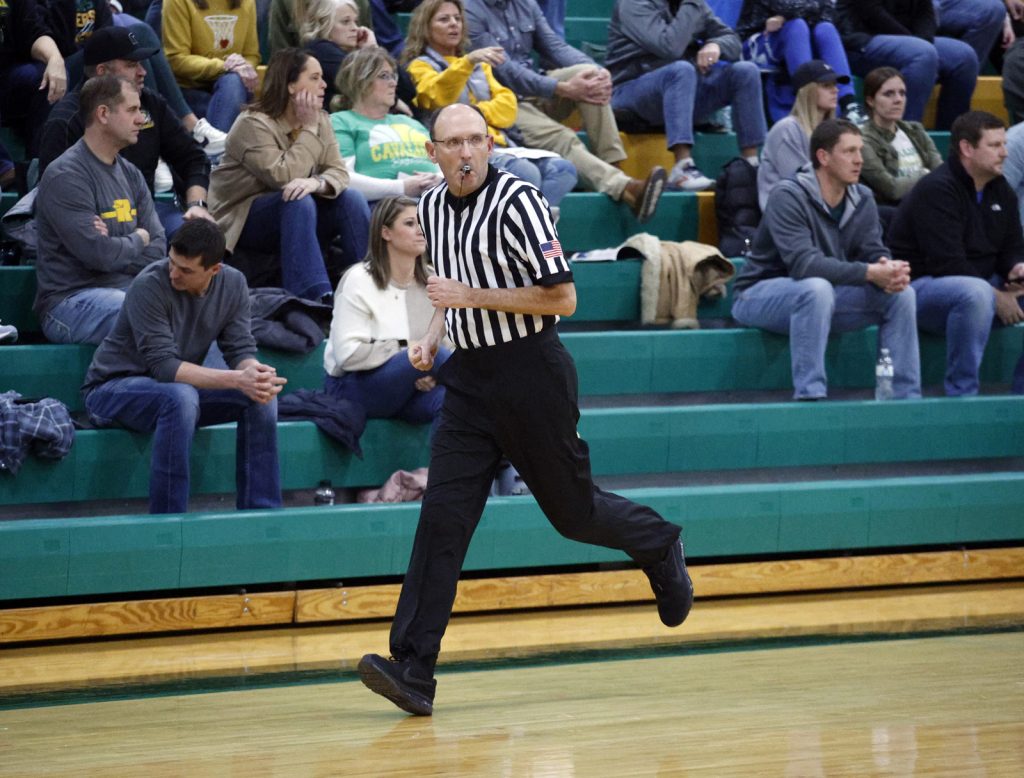
And the more games that get crammed into the final four or five weeks of the season don’t help.
“It’s tougher to recoup and rehab at an older age than when you’re younger,” Zimmerman said. “A lot of things that are not in your favor when you’re older. We still enjoy doing it, but we have to be smart about it. When you’re working four or five nights a week for multiple weeks, it’s going to wear you down. You’ll end up paying for it in the long run.”
Zimmerman said he’ll average 70 or more games a season. That, multiplied by 35 years of officiating, some of which came during the era of 2-man crews, adds up quick, he said.
“It gets to be staggering when you do the numbers,” he said.
Still, there’s always a bright side. There’s the camaraderie with the other officials and, lately, a growing sense of gratitude.
“I’ve had more assistant coaches, administrators, parents and even some players thank me for doing it this year than in the previous 29 years combined,” Witlock said.